
RESTORATION OF POWER
In our procedures, de-energization (disconnects) are done when water levels reach above 11.0 feet at Croton. This is communicated out in advance so residents know what to expect. 11.0 feet is used as threshold because at that level we know homes are surrounded with water.
- Disconnects are done proactively in order protect the homes from shortages which can cause structure fires. In addition, this process protects emergency personnel working in the area and property owners when they return.
- Subdivision locations are provided to the companies with the known list of addresses that are expected to be inundated with water based on the forecast. It is up to the power companies on how they have to disconnect the area based on their equipment and infrastructure.
- The power companies goal is to try and mitigate loss of customers more widespread to the best of their ability. However, in some cases they are unable to isolate the outage to a smaller area. This results in some residents losing their power even when they are not inundated with water in order to protect their neighbors who are.
- In order to restore power, assessment teams have to confirm it is safe to do so. Depending on how their infrastructure is built/connected, it may not be possible to restore power to individual homes. In these cases, all hazards in the area need to be cleared as a neighborhood before power can be restored, thus delaying restoration to unimpacted neighbors.
- Homes that have had water inside them must be cleared by the electrical inspector before they can be restored.
Please note: restoration of power will only be completed for homes that have been assessed and verified safe to re-enter AND if crews can safely access the location, including their own power infastructure. This determination is left up to the field supervisor.
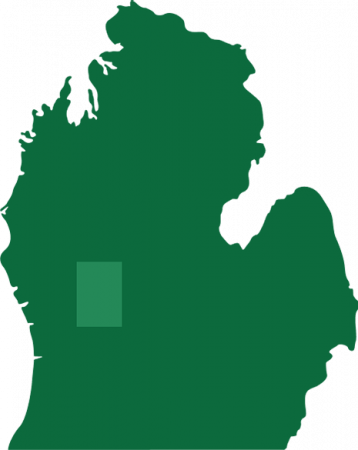
To view the map of the Muskegon River Floodplain within Newaygo please visit the link below:
To see information about the statewide flooding please visit this link: 2026 Statewide Flooding
To see all affected areas please see documents below.
Facebook Scam Posts
We are receiving reports of scams in the area. Physical item donations are being accepted by Love Inc., 11 W. 96th St, Grant MI 49327. Financial donations are being accepted by the Fremont Area Community Foundation. These are the only donation organizations recognized by the Newaygo County Emergency Operations Center.
Be aware of scammers posing as contractors and relief organizations. Use registered local contractors backed by reliable references. Ensure you have a written contract and do not pay for more than half of the costs in advance.
Review this additional information for tips to protect yourself from after disaster scams:
Follow our Nixle feed, Facebook, and the https://www.newaygocountymi.gov/ website for updates to the flooding event as well as available resources.
Please report any damage to your homes from the flooding to https://arcg.is/10ab1j or by scanning the QR code.
Click the icon below to see Nixle Alerts for the area.
Michigan Disaster Recovery Center Now Open in Newaygo County
Inspire Church
918 Garden Ave.
Fremont, MI 49412
Hours of Operation
Monday through Friday: 8 a.m. to 6 p.m.
Saturday: 8 a.m. to 6 p.m.
Closed Sunday
Saturday hours may be adjusted in the coming weeks. Any changes will be announced in advance.
Representatives from the Federal Emergency Management Agency (FEMA) and the U.S. Small Business Administration (SBA) are available at the center to meet one-on-one with residents. Staff can help survivors apply for FEMA assistance, check the status of an existing application, upload documents, and learn about SBA low-interest disaster loans and other recovery resources. No appointment is necessary.
Who May Be Eligible
Newaygo County homeowners and renters with uninsured damage to their primary home, personal property loss, or other disaster-related emergency needs caused by the April storms and flooding may be eligible for FEMA assistance. Assistance may include funds for basic home repairs, temporary housing, hotel stays, and other serious disaster-caused needs.
Residents with homeowners, renters, or flood insurance should file a claim with their insurance provider first. FEMA cannot duplicate benefits for losses covered by insurance; however, applicants whose policies do not cover all disaster expenses may be eligible for federal assistance.
Information Needed to Apply
- Contact information (phone number, current mailing address, email address, and damaged home address)
- Social Security number
- A general list of damage and losses
- Annual household income
- Banking information, if choosing direct deposit
- Insurance information, if insured (policy number or the agent and/or company name)
Visiting a Disaster Recovery Center is not required to receive assistance. The fastest way to apply is online at DisasterAssistance.gov or in Spanish at DisasterAssistance.gov/es. Residents may also apply through the FEMA App or by calling the FEMA Helpline at 800-621-3362, where assistance is available in multiple languages. Individuals who use a relay service, such as Video Relay Service (VRS) or captioned telephone, should provide FEMA with their number for that service.
The deadline to apply for FEMA Individual Assistance is August 31, 2026.
Disaster assistance is available without regard to race, color, religion, national origin, sex, age, disability, English proficiency, or economic status.
SBA Low-Interest Disaster Loans Available to Newaygo County Residents and Businesses
Following the Presidential disaster declaration for the April 10–21, 2026, severe storms, tornadoes, and flooding, the U.S. Small Business Administration (SBA) is offering low-interest disaster loans to Newaygo County homeowners, renters, businesses of all sizes, and private nonprofit organizations (SBA Declaration MI-20044).
Home Disaster Loans — Homeowners may borrow up to $500,000 to repair or replace their primary residence. Homeowners and renters may borrow up to $100,000 to repair or replace personal property, including clothing, furniture, appliances, and vehicles.
Business Physical Disaster Loans — Businesses of any size and private nonprofit organizations may borrow up to $2 million to repair or replace disaster-damaged real estate, machinery and equipment, inventory, and other business assets.
Economic Injury Disaster Loans (EIDL) — Working capital loans are available to small businesses, small agricultural cooperatives, and most private nonprofit organizations that suffered financial losses as a direct result of the disaster, even without physical damage. These loans may be used to pay fixed debts, payroll, accounts payable, and other bills that cannot be paid due to the disaster.
Loan Terms
How to Apply
- Apply online through the MySBA Loan Portal at sba.gov/disaster
- Meet with an SBA representative in person at the Michigan Disaster Recovery Center at Inspire Church, 918 Garden Ave., Fremont, now open
- Contact the SBA Customer Service Center at 800-659-2955 or disastercustomerservice@sba.gov (individuals who are deaf, hard of hearing, or have a speech disability may dial 7-1-1 for telecommunications relay services)
Application Deadlines
Economic injury loans: March 30, 2027